


Some years, you leave a show like Natural Products Expo West and know exactly what you’re going to say. Others, you sit down and realise that processing it all is not nearly as straightforward as you’d expected.
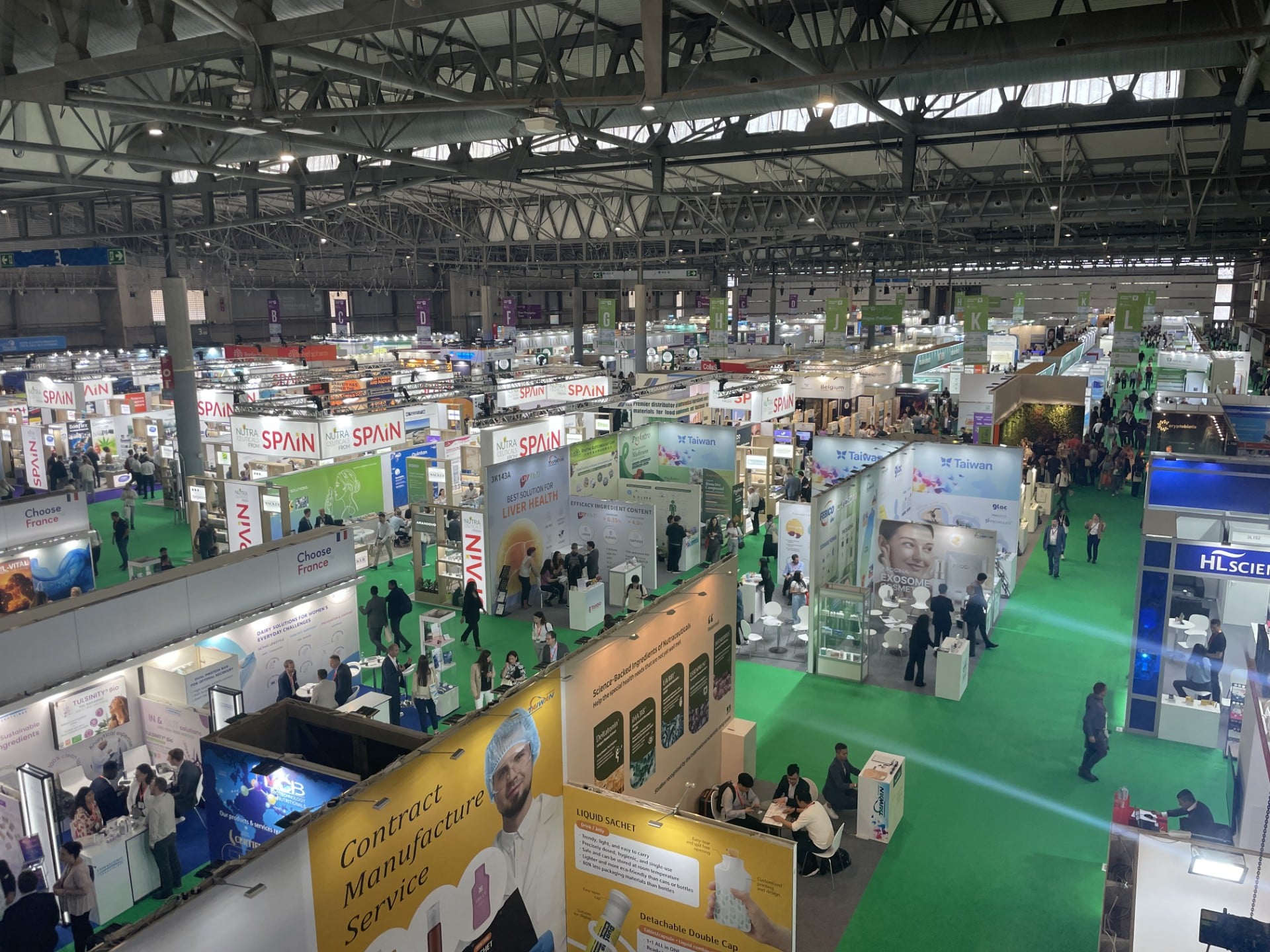
This year is the latter. Because the reality is that walking the halls of Expo West is like stepping into a parallel universe created by thousands of brands all trying to project their best possible version of reality.
It’s easy to write something that simply lists what you saw: the new products, the categories that felt busy, the ideas that seemed to be everywhere. But when there’s so much energy and so many products presented as meaningful innovations, it’s easy for things to feel exciting and on trend. What’s going on beneath the surface is harder to see.
Which leads us to a surprisingly difficult question: are we seeing a true reflection of the market, or a version that everyone wants us to see?
Add to this the fact that we all walk the show with our own interests and expectations, noticing the things that align with what we already believe is important and walking straight past others. Our unknowns often remain unknown.
And so, when you step back afterwards and try to make sense of it all, the real challenge is not describing what was there but deciding what it means.
That said, I do – of course – have a few thoughts.
Protein isn’t adding up
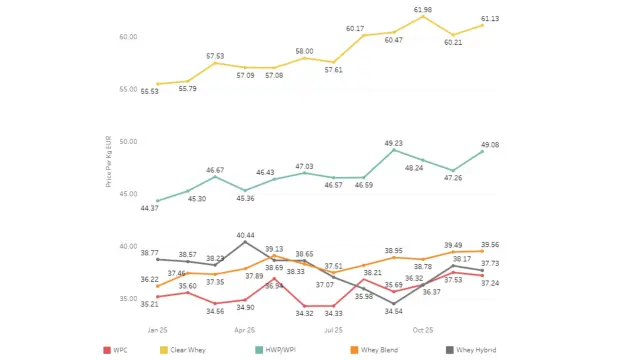
Across our industry there’s a constant conversation about whey protein supply as demand continues to grow; we widely acknowledge that rising ingredient costs, supply chain pressures and sustainability challenges are issues we need to address.
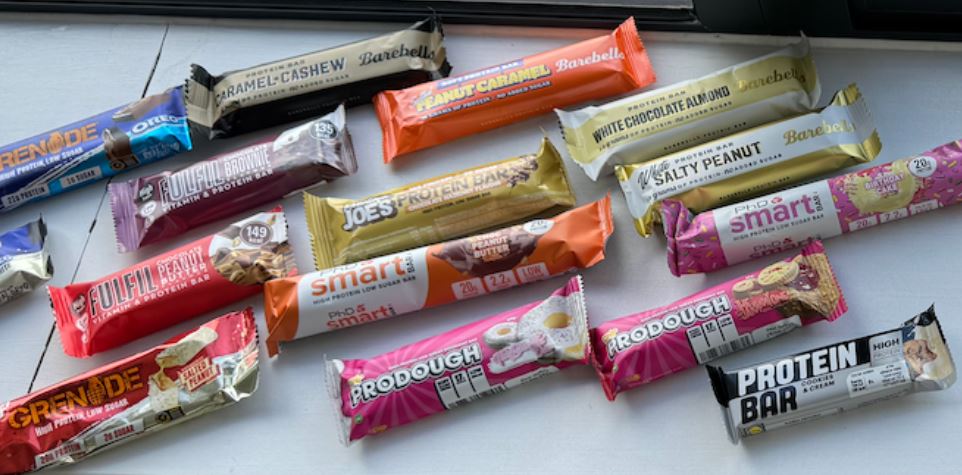
But then you walk the show floor and whey protein is everywhere, appearing in almost every format you can think of and some you probably wouldn’t.
That’s not to say there weren’t alternative protein sources on show, but it does make you wonder where the disconnect is between the strategic conversations taking place and what appears in so many finished products. Even solutions that we may have expected to be more prominent, such as precision fermentation, were still dominated by only a few (great) players.
Protein may be everywhere, but I was left with an uneasy feeling that we aren’t taking the steps we need to support its long-term success. How the industry responds over the next few years will be crucial to whether the protein trend can continue at its current rate.
Survival of the fittest
Another thing Expo West reminds you of is just how quickly ideas can spread. A concept that appears in one corner of the show floor one year will have entire rows of stands exploring variations of the same idea the next. Just look at hydration or functional sodas – the speed at which categories can become saturated is incredible.
But it also forces a slightly more reflective question: what does it actually mean when you see dozens of brands doing the same thing? If fifty brands enter a category, is it validation that the opportunity is real, or is it everyone jumping on the bandwagon and only a handful of those brands will survive? What you see isn’t always a true reflection of what will endure.
This isn’t intended to sound cynical; it's simply the nature of markets that move this quickly and attract this many new entrants. When categories become crowded and ideas spread rapidly, the majority of concepts inevitably fall away over time.
Which brings us to the all-important point of differentiation. When you’re walking through the show, it’s very easy to be influenced by the theatre of it all – the bright stands, the music, the free samples, the energy, the excitement of something new. In that moment, everything feels compelling. But when you take a step back the underlying truth becomes clearer: product alone rarely determines which brands succeed. Being able to cut through the noise, however, may well do.
GLP-1 is everywhere and… nowhere
What was striking about GLP-1 is that it was everywhere and nowhere all at once. Anyone expecting “GLP-1” to be plastered on stands and products will have noticed its absence in that sense.
But once you started looking at the products rather than the labels, its influence was easier to see. High-protein foods were, as we’ve said, everywhere, alongside fibre, hydration, smaller portion formats, nutrient-dense snacks and foods designed to deliver sustained energy rather than indulgence. All of these are highly relevant to consumers using GLP-1 medications, even if the connection is never spelled out.
It’s an interesting shift that highlights how the industry is responding to GLP-1. Perhaps a year ago we expected GLP-1 to manifest as a clearly defined product category; something obvious, labelled and easy to identify. But that may not be how this unfolds.
Instead, GLP-1 use might simply be accelerating broader shifts in how food and nutrition products are being designed. Higher protein and fibre, hydration and improved nutrient density were already moving up the agenda – it may just be that GLP-1s are reinforcing that direction.
Taste is king, apart from when it isn’t
Taste is king, we all know that. No matter how functional a product is, if it doesn’t taste good, it simply won’t survive.
The progress that’s been made when it comes to taste and texture over the past decade has been significant. Many categories that once struggled have improved dramatically and the technical capabilities behind formulations continue to move forward.
That said, spending several days tasting products across a show floor is also a fairly revealing exercise. Of course, taste is completely subjective but my main takeaway was that the majority simply weren’t good enough.
This is particularly noticeable where functional nutrition and mainstream food formats come together. When products position themselves as doughnuts, cookies or other familiar indulgences, they inevitably invite direct comparison with the originals and most of them just aren’t there yet. I point you in the direction of the swathe of sodas that just tasted like… chemicals?
The good news is that every year, we get a little closer, but the reality remains that for many products, the ambition of replicating traditional foods is still ahead of the sensory experience that’s delivered.
Coming back to survival of the fittest – taste is probably one of the strongest reasons why products will fail. If something is to succeed, consumers must want to eat or drink it, not just tolerate it. Unfortunately, when it comes to taste, we still have some way to go.
The search for authenticity
Around a decade ago, plant-based became the headline and with it, an idea that signalled both health and progress in one word. Although the moment has passed, plant is still a huge category. However, consumers have now spent long enough with plant-based products to understand that they aren’t necessarily healthier or more nutritionally balanced. A plant-based cookie is still a cookie.
In its place, the language has shifted towards something broader and far more ambiguous: the idea of being more natural.
The problem with this, of course, is that natural can mean almost anything, from removing artificial sweeteners or reducing sugar to ingredient sourcing, shorter supply chains or more recognisable raw materials. Almost any brand can claim some version of natural if it chooses to frame the story that way.
Which inevitably raises the question of credibility. If everyone can tell a story about naturalness, how do you distinguish between marketing language and something genuinely meaningful?
The answer? Bring validation and authenticity together so the proof points become a natural extension of the brand’s story. This combination felt like a collective recognition that success is less about claims and more about what brands can convincingly demonstrate.
A return to the fundamentals
For a while, functional health felt like it was becoming increasingly specialised, but a renewed focus on the basics seems to be shifting that.
We’ve talked about the popularity of hydration; but we also had gut health continuing to attract significant attention, greens and superfood blends remaining popular, and creatine exploding into multiple formats. What was also noticeable was the number of products that were simply emphasising straightforward, recognisable nutrition.
None of these ideas are new, but what we’re seeing is an understanding that there’s value in focusing on the foundational aspects of wellbeing that consumers are already familiar with.
In some ways, this feels like a natural evolution: as functional nutrition becomes more mainstream, the emphasis gradually shifts away from highly specialised claims and towards solutions that fit easily into everyday habits.
Of course, once a foundational idea gains momentum, it quickly attracts a large number of followers and we’re back to the point around the survival of the fittest. But perhaps that’s simply part of the story – innovation continues, always has, always will.
A final reflection
The honest truth is: you can’t not love Expo West.
The energy, scale, creativity and ambition make it impossible – it’s genuinely like being a kid in a sweet shop. As you walk through hall after hall of brands and products, it reminds you why people are drawn to this industry in the first place.
But at the same time – and here’s the cynic in me coming out – you know that what you’re seeing is just a show, in all senses of the word. Because beneath the energy sits a quieter reality that is much harder to ignore once you get home: many of those brands will not survive.
Which is why it’s so tricky to interpret what the show actually tells us. What does seeing a lot of something actually mean? Does it mean the category is strong and the opportunity is real, or does it simply mean the industry has collectively decided to chase the same idea? Or perhaps it isn’t about what we saw or what categories were the biggest but what, in the real world, we’d buy.
The more I’ve thought about it, the more I’ve realised that the real value of the show might lie somewhere else. Rather than providing clear answers about where the market is going, Expo West forces us to ask the harder questions that brands are wrestling with, and perhaps that is the most honest conclusion.
The show is extraordinary, but if you go expecting definitive answers about what will succeed, you’ll probably be disappointed. In reality, you’ll leave amazed by what’s out there, but most likely with more questions than answers.

.jpg)


.jpg)
.jpg)
-min.jpg)


.jpg)


