Not all protein bars are made the same, and ‘clean’ protein bars may well be becoming the latest trend. But what does clean even mean?
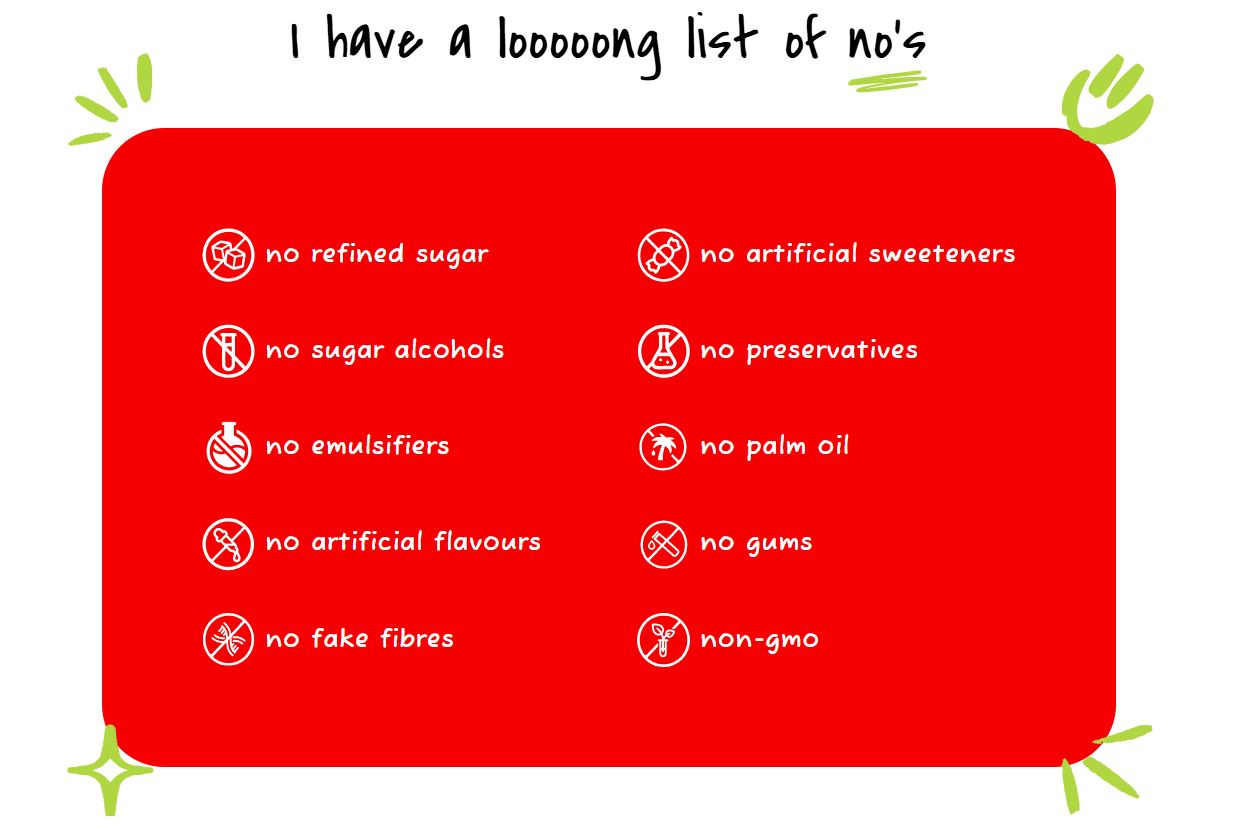
Taking a top line approach, it seems quite simple: no preservatives, no artificial sweeteners and no artificial flavours. But as the image below shows, for some, there’s a “looooong list of no’s”.
Honestly I Am claims its “clean protein bar tastes so good, it feels dirty”, and it’s made with only 5-7 ingredients, including dates, cocoa butter and/or powder, cashews and/or almonds, a protein blend of milk and wheat protein, and cocoa soy protein crispies. Each bar delivers 12g of protein, 15.6g-16.9g of carbs, 10.8g-12.8g of sugar, and 12.5g-13.1g of fat.
Positioned as a perfect snack “mid-meeting, mid-walk, mid-existential crisis” or “that weird hour between lunch and dinner”, it’s essentially an everyday bar.
Another example is gut friendly Protein Bars from FodBods that are made from “clean, natural ingredients”, allowing you to say goodbye to that “funny tummy” and hello to plant-based protein with a low FODMAP. READY has recently partnered with retailer The Vitamin Shoppe to offer a CLEAN Protein Bar packed with 15g of protein and 7g of fibre.
It’s a clear signal that brands are doubling down on the accelerating naturalness trend, and grounding their ethos in natural, clean ingredients and processing.
However, these bars are consistently capped at the lower end of the protein spectrum (15g per serve). Viewed in isolation it might seem like a compromise but zoom out and it aligns with a wider category shift. The protein dose in bars has been lowering over time and 15g is being reframed as the new functional baseline. In which case, the brands leaning into natural cues may already be ahead of the curve.
.jpg)